Contour vs. Bronzer: What's the Actual Difference (and Where Does Each Go)?
Contour and bronzer are not the same product doing the same job under a different name — contour is a cool-to-neutral toned product used to mimic shadow and reshape how a feature reads, while bronzer is a warm-toned product used to add an overall sun-warmed color across the face. Mixing the two up is the most common reason a "contoured" face ends up looking muddy instead of sculpted, or a "bronzed" face ends up looking gray instead of warm.


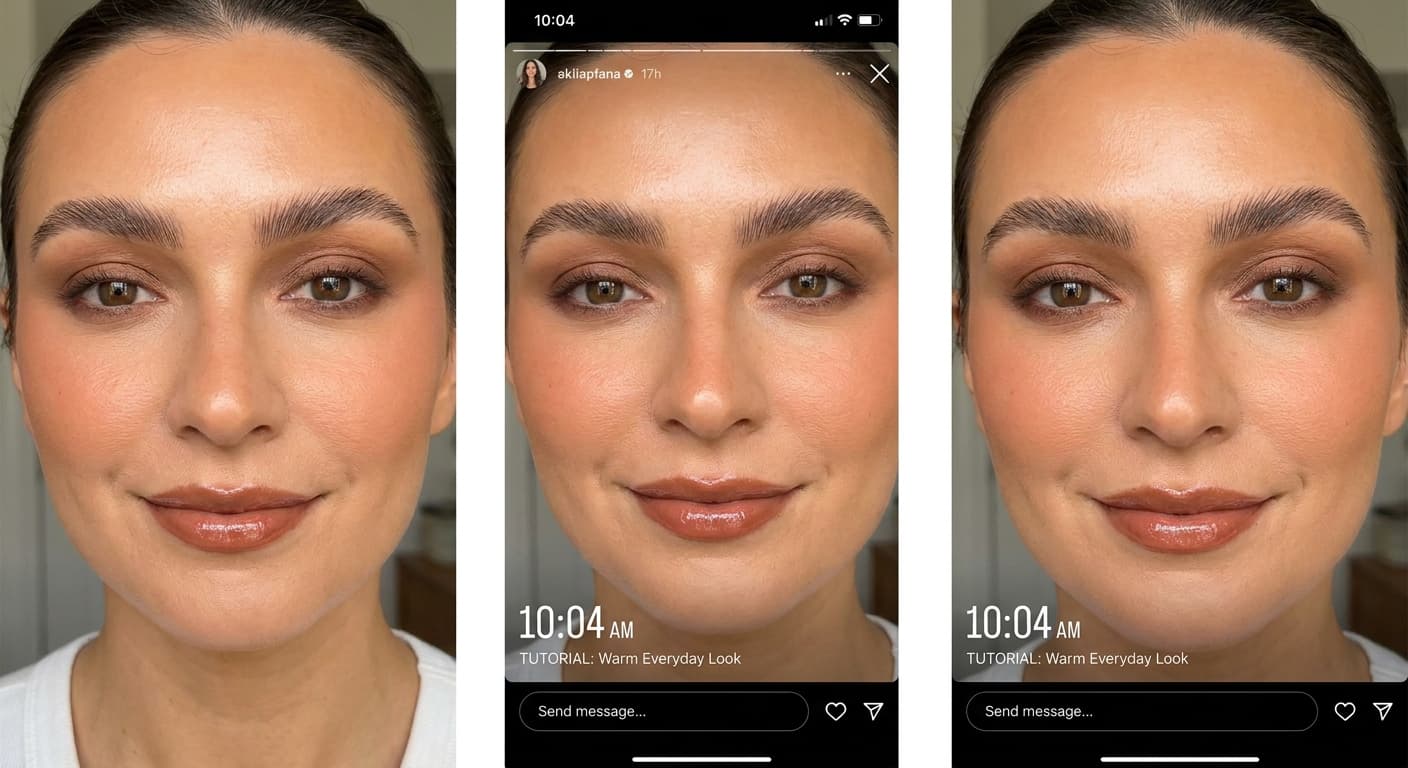
Warm Amber Glow's bronzed contour and warmth rendered on a bare face — synthetic test photo, not a real person
What each product is actually doing
Contour is cool-to-neutral (taupe, gray-brown) because shadow itself is cool, not warm — placed in the hollows of the face (under the cheekbone, at the temples, along the sides of the nose and jaw) it reads as depth rather than color. Golden Opera Red Lip in the library lists exactly this kind of product in its breakdown: a "Contour powder — taupe & warm bronze duo," noted as essential for the deep facial sculpting the stage-ready look needs.
Bronzer is warm (orange-brown, terracotta) because it's standing in for sun exposure, not shadow — placed where the sun would naturally hit (forehead, the tops of the cheekbones, the bridge of the nose, the chin, often described as a loose "3" shape) it reads as overall warmth rather than added dimension. It's not sculpting the face, it's warming it.
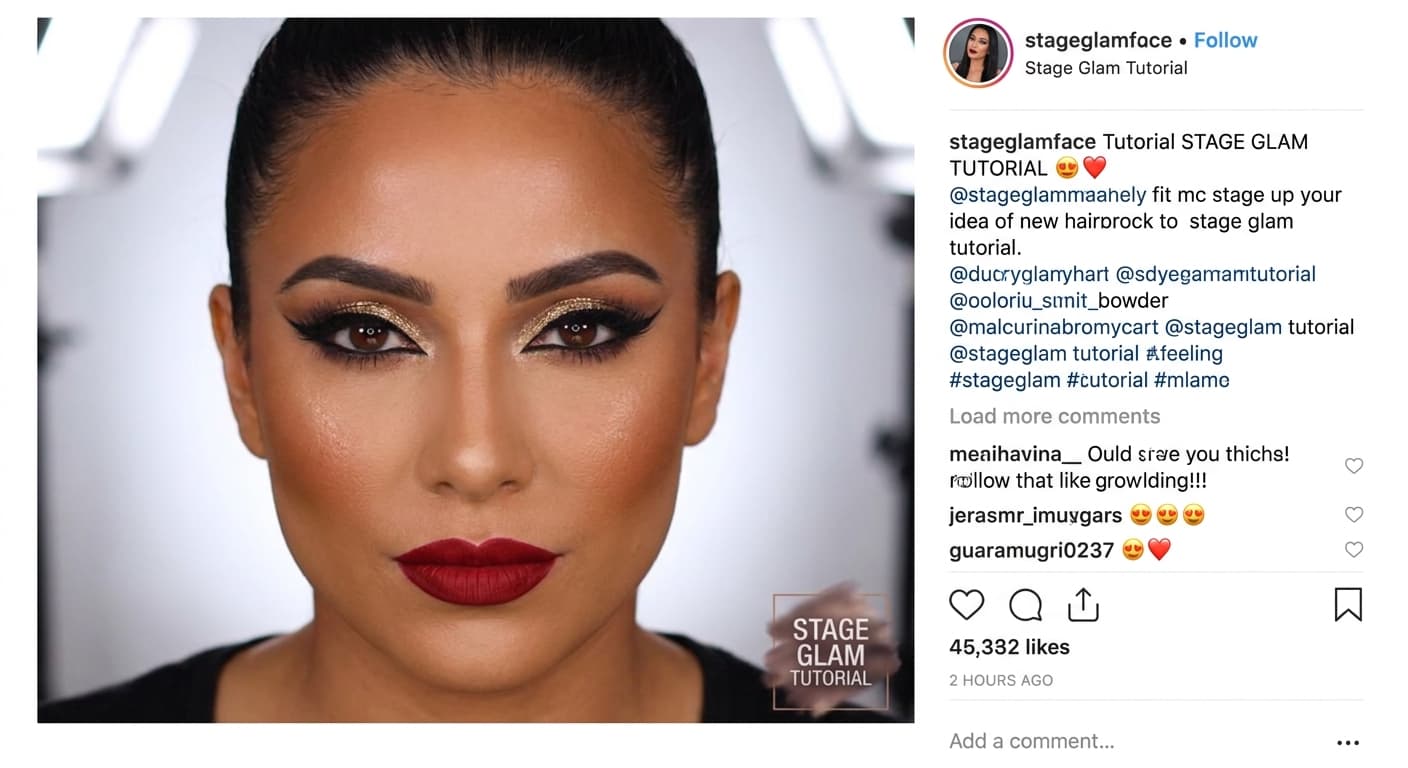
Regal, icy stage queen
Best for: stage performance · gala · Advanced
Try This Look →Why mixing them up is the usual mistake
Using a warm bronzer in the hollows where cool contour shading belongs doesn't read as shadow — warm tones don't sit back the way cool ones do, so the result usually looks like dirt or muddy skin rather than sculpted structure. Going the other way — using a cool contour shade as an all-over warmth product — leaves skin looking gray or ashy instead of sun-warmed, since it's missing the warm pigment that actually reads as glow.
The two aren't mutually exclusive, either — plenty of looks use both together: contour in the hollows for structure, bronzer swept over the high points on top of it for warmth. Warm Amber Glow and Gilded Bronze Glam in the library both lean on this warmer, sun-kissed end of the effect rather than heavy sculpting, which is a different look than Golden Opera Red Lip's more dramatic, stage-built contour.
How to see which effect actually works on your face first
Bone structure changes how visible either effect reads a lot more than most people expect — the same contour placement that reads as subtle definition on one face shape can read as an obvious stripe on another. Pick Warm Amber Glow or Gilded Bronze Glam from the library for the warmer, glow-forward end of the spectrum, or Golden Opera Red Lip for a heavier, more sculptural contour, and see the actual placement rendered on your own photo before deciding what to buy.
Every result comes with a step-by-step tutorial and the product categories used. First three tries are free, no signup required.
Looks mentioned in this article

See it on your own photo — free, no signup required.
Try AI Makeup On Your PhotoFAQ
Is bronzer the same as contour?
No — contour uses a cool-to-neutral toned product to mimic shadow and reshape how a feature reads, while bronzer uses a warm-toned product to add overall sun-warmed color. They create different effects and aren't interchangeable, even though they're often shopped side by side as similar products.
Do I need both contour and bronzer?
Not necessarily — plenty of everyday looks use just one, or neither. Contour and bronzer solve different problems (shadow and structure versus overall warmth), so which one you need depends on the effect you're going for, not a rule that says every look requires both steps.
Where does bronzer actually go on the face?
Wherever the sun would naturally hit it — the forehead, the tops of the cheekbones, the bridge of the nose, and the chin, often described as a loose "3" shape down the side of the face. That's different from contour placement, which goes in the hollows (under the cheekbone, at the temples, along the jaw) to mimic shadow rather than sun.