How to Apply Blush: Placement and Color, by Face Shape
Blush placement changes the apparent shape of your face, not just where the color sits — applied straight across the apples of the cheeks and blended down reads as softening and rounding, while swept up and out toward the temples reads as lifting and elongating. Which one to use is a face-shape decision, and it matters more to the overall effect than which exact shade of pink or coral you pick.


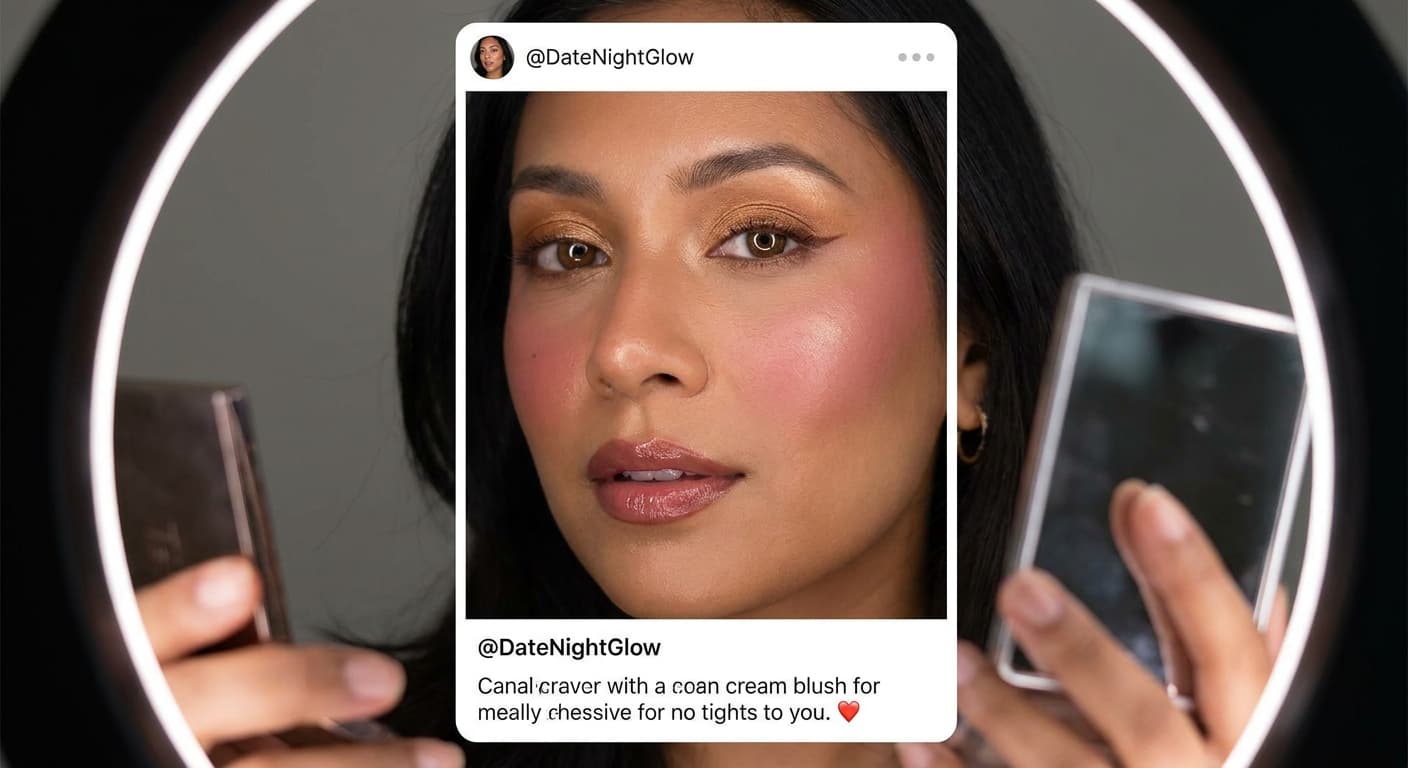
Sunset Glow & Rosy Cheeks blush placement rendered on a bare face — synthetic test photo, not a real person
Placement: straight across versus swept up
Smile to find the apples of your cheeks, and apply blush there in a circular motion blending downward and outward if your face is longer or more angular — this placement adds roundness and softness, balancing out length or sharp angles. If your face is rounder, sweeping blush from the apple up and out toward the top of your ear instead adds lift and a subtle contour effect, keeping the face from reading as flatter or wider than it already does.
Sunset Glow & Rosy Cheeks in the library is built around exactly this kind of deliberate, visible cheek placement — the blush isn't a subtle afterthought, it's doing real work in how the whole face reads.
Color: matching your undertone, not just your mood
Cool-undertone skin (pink or blue undercast) tends to read most naturally in pink and rosy blush shades, while warm-undertone skin (golden or peachy undercast) tends to look more natural in peach, coral, and warm terracotta tones. Deeper skin tones can generally carry more saturated berry and brick shades without them reading as too pale or chalky, the way a soft pastel pink sometimes can on deeper complexions.
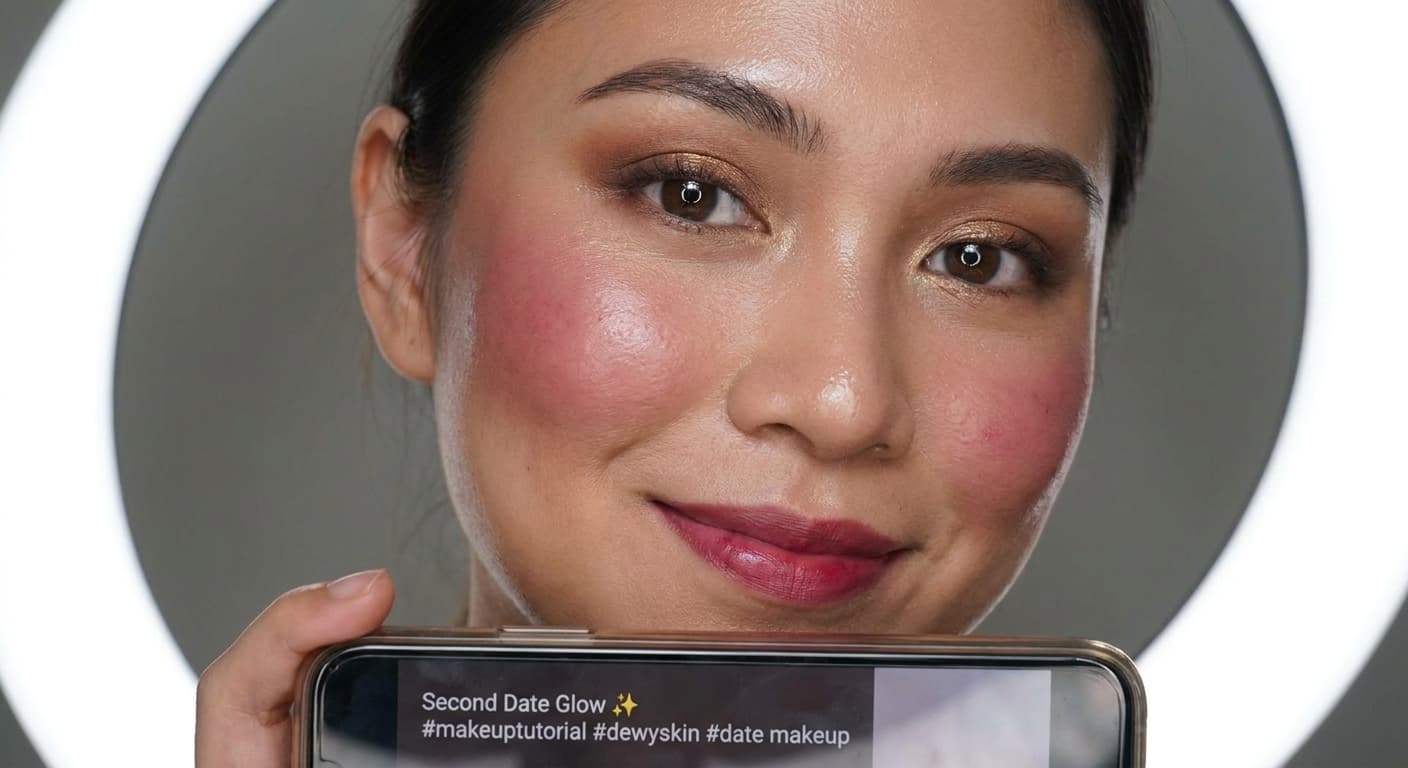
Radiant Rosewood & Gold leans into a warmer rosewood-and-gold blush tone specifically because it reads well across a wide undertone range without going full-on cool pink or full-on peach — a reasonable starting point if you're unsure which family suits you.
How to see placement and color on your own face
Face shape and undertone are both easier to reason about in theory than to actually judge in the mirror. Pick Sunset Glow & Rosy Cheeks or Radiant Rosewood & Gold from the library, or upload a reference photo of a blush placement you found elsewhere, and see exactly how it sits on your own bone structure and coloring before deciding where to actually apply product.
Every result comes with a step-by-step tutorial and the product categories used. First three tries are free, no signup required.
Looks mentioned in this article
See it on your own photo — free, no signup required.
Try AI Makeup On Your PhotoFAQ
Where should blush go on a round face?
Swept up and out from the apple of the cheek toward the top of the ear, rather than straight across — this placement adds lift and subtle contour instead of adding more roundness to an already round face.
How do I know if I have a warm or cool undertone for blush?
Cool undertones generally suit pink and rosy blush shades best, while warm undertones suit peach, coral, and terracotta tones best — if you're unsure, a warm rosewood shade tends to read reasonably well across both.
Can cream blush and powder blush be used together?
Yes, but cream should go on first, before powder foundation is fully set — layering powder blush on top of wet cream product tends to blend unevenly, while cream-then-powder in that order sets cleanly.