How to Actually Blend Eyeshadow: Transition Shades, Finishes, and Technique
Eyeshadow that blends cleanly almost always uses two shades doing two different jobs — a matte transition shade swept through the crease to build soft depth, and a more pigmented shade (shimmer, metallic, or a bolder matte) packed onto the lid as the actual color payoff — rather than one shade applied everywhere and rubbed around until it looks blended. Skipping the transition shade, not a lack of blending skill, is the most common reason eyeshadow ends up looking patchy or hard-edged.


90s Olive Grunge's matte eyeshadow blend rendered on a bare face — synthetic test photo, not a real person
The two-shade structure almost every blended look uses
A transition shade is a matte tone close to your natural crease shadow, swept through the crease first, before any other color — it builds a soft gradient for the rest of the look to sit on rather than a flat background. Warm Amber Glow's product notes call for "highly blendable matte shades to get that seamless transition," and Radiant Rosewood & Gold specifically lists "buttery transition mattes to create depth" as part of its breakdown — this step is doing structural work, not just adding color.
The star shade — usually a shimmer, metallic, or more saturated matte — goes on top of that base, packed onto the lid with a flat brush or fingertip rather than blended in with a fluffy brush. Golden Opera Red Lip's "soft, richly pigmented metallic gold as the star shade" and Sultry Gothic Glam's "highly pigmented formula for a rich, seamless blend" of plum and black are both built this way. It's why a single shimmer shade applied alone often disappoints — with no matte transition underneath it, the color tends to sit as a flat patch instead of blending into the crease.
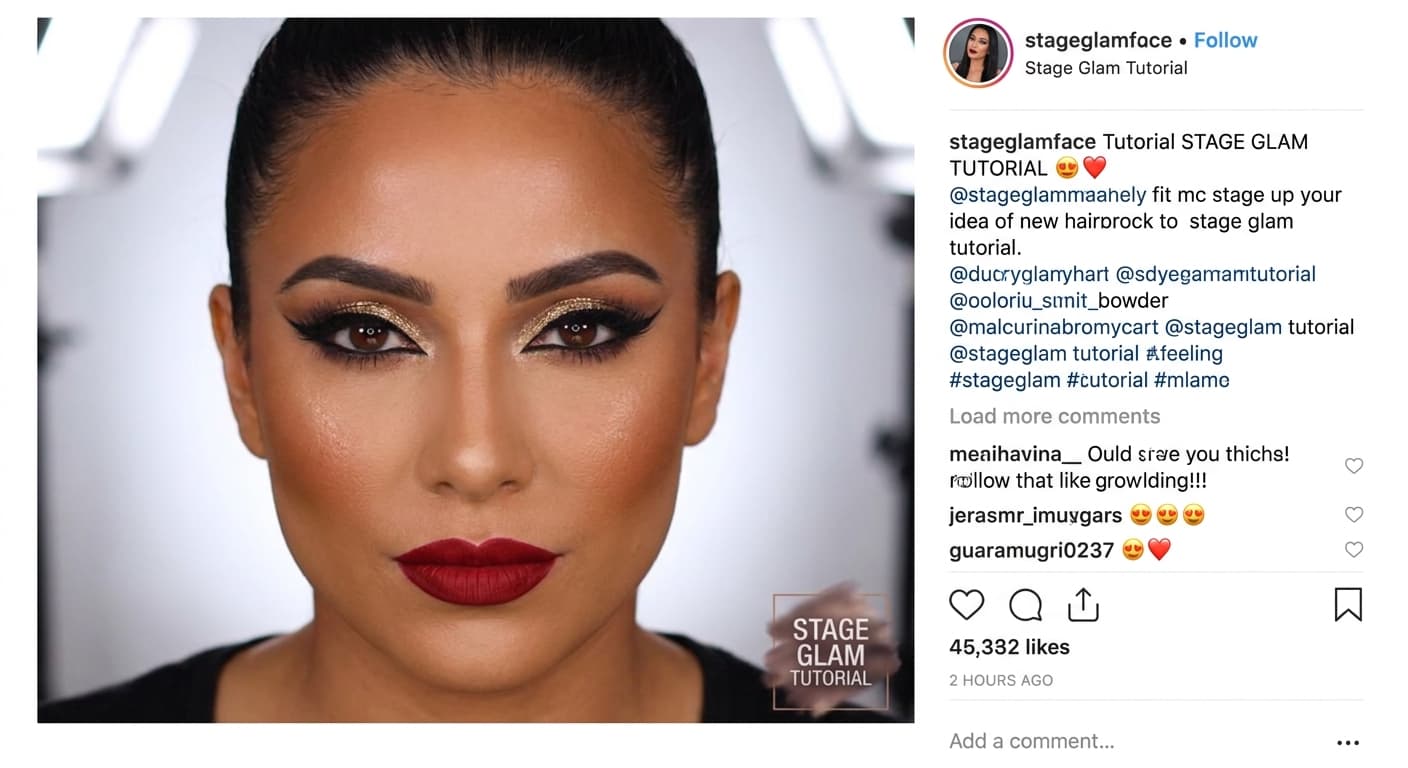
Regal, icy stage queen
Best for: stage performance · gala · Advanced
Try This Look →Matte, shimmer, metallic, glitter, foiled — what each finish is actually for
Matte is the standard choice for transition and crease work, and it's also the main pigment in looks built around bold color rather than shine — 90s Olive Grunge leans on "rich, earthy, desaturated greens" entirely in matte, and Electric Fuchsia Fantasy uses a "high-pigment matte neon" as its lead shade specifically because the effect is about saturated color, not light reflection.
Shimmer and metallic shades are built for lid color that catches light without heavy texture — most of the library's warmer, glow-forward looks (Sunset Glow & Rosy Cheeks, Radiant Rosewood & Gold, Golden Opera Red Lip) use this finish as their star shade. Foiled and glitter finishes push further into deliberate shine or literal sparkle and generally need different application — patted on with a flat brush or damp fingertip rather than swept — which is why Gilded Bronze Glam calls for "high-foiled metallic finishes" for its wet-look shine, and Dewy Sweet Rose Glow specifically wants "sheer, dewy-finish glitter" rather than a heavier chunky texture. Pastel shimmer needs extra care around pigment quality — Y2K Frosty Icy Glam's frosty pastel blue is described as needing a formulation that "doesn't look chalky," a problem pale shimmer shades run into more than deep or saturated ones do.
How to see a specific palette's actual effect on your own eyes first
How much of a transition shade is even visible once your eyes are open depends heavily on lid shape and crease depth — the same reason a wing or a soft gradient can read differently on hooded, almond, or deep-set eyes. Skin undertone changes how a "gold" or "bronze" shimmer shade actually reads just as much as the shade name suggests it should.
Pick Golden Opera Red Lip, Gilded Bronze Glam, Y2K Frosty Icy Glam, or 90s Olive Grunge from the library depending on which finish you're curious about, or upload a screenshot of a specific eyeshadow look you found elsewhere, and see the actual blend rendered on your own photo before buying a palette. Every result comes with a step-by-step tutorial and the product categories used. First three tries are free, no signup required.
Looks mentioned in this article

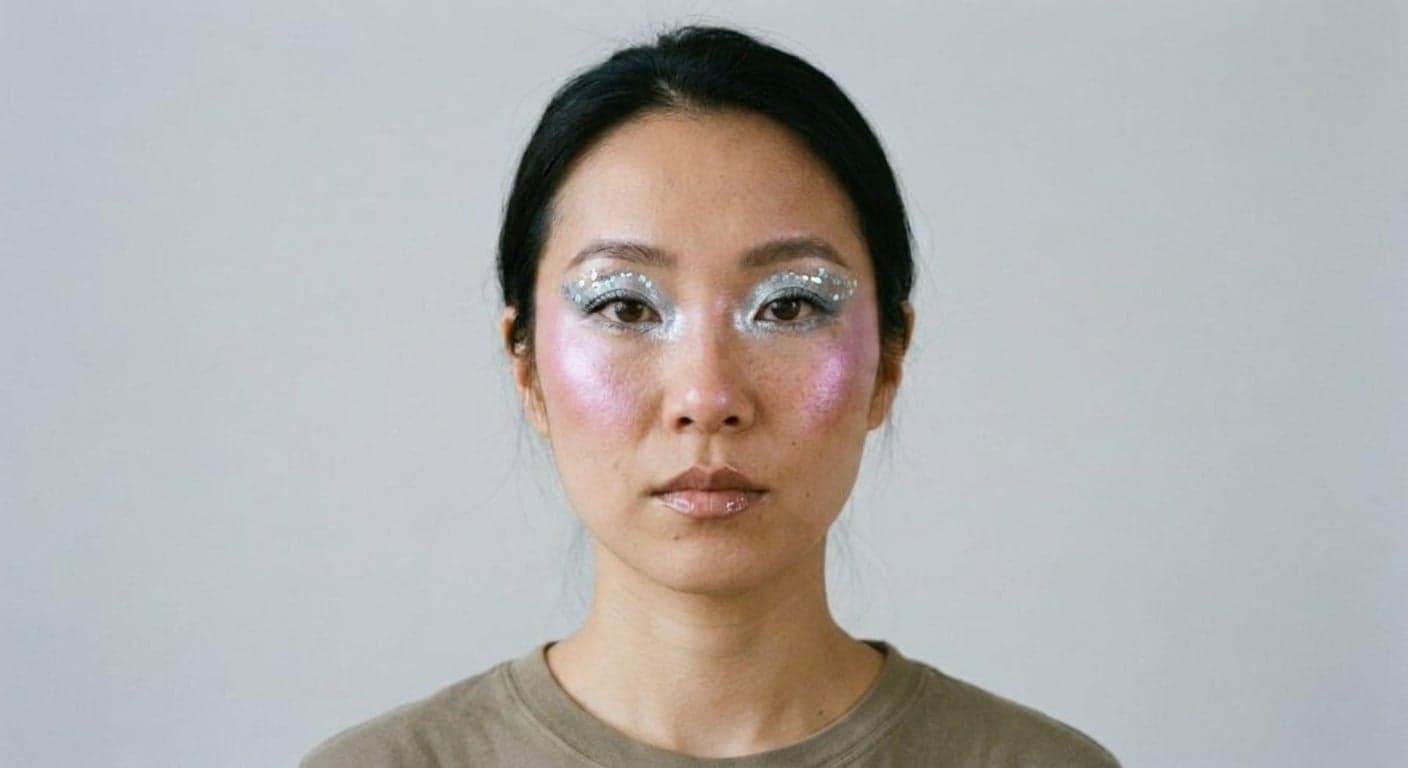

See it on your own photo — free, no signup required.
Try AI Makeup On Your PhotoFAQ
Why does my eyeshadow look patchy instead of blended?
Usually because there's no transition shade underneath — a pigmented or shimmer shade applied straight onto bare lid tends to sit as a hard-edged patch, while a matte shade blended through the crease first gives it a soft gradient to sit on instead of a flat background.
What is a transition shade in eyeshadow?
A matte shade close to your natural crease shadow, swept through the crease before any other color, to build soft depth that the rest of the look blends into — it's the step most eyeshadow tutorials assume you already know about, and skipping it is the most common cause of patchy-looking results.
Should I use a brush or my finger for shimmer eyeshadow?
Fingers or a flat, dense brush generally pack on more pigment with less fallout than a fluffy blending brush, which is built for softly diffusing matte transition shades rather than depositing solid color — using a fluffy brush on a foiled or glitter shade usually picks up less product than the shade can actually deliver.